Ice Hockey Guide
Everything you need to know about hockey sticks, from choosing your first stick to understanding the nuances that professional players consider.
Understanding Hockey Stick Anatomy
The Blade
The blade is where stick meets puck. Its curve pattern affects shot trajectory, puck handling, and passing accuracy. Blade curves are typically measured by depth (how much the blade bends) and the point where the curve begins.
Toe curves open up quickly and help with quick releases. Mid curves offer balanced performance for all-around play. Heel curves provide power and are popular among defensemen for slap shots.
The Shaft
Shaft shape affects grip comfort and wrist mobility. Round shafts allow easy rotation, while concave or square shapes lock the hands in position for consistent shooting form.
Grip coatings range from smooth to textured. Some players prefer bare carbon for easier hand sliding during dangles, while others want maximum grip for powerful shots.
The Flex
Flex rating indicates how much force bends the stick. Lower numbers mean more flex. A common guideline suggests using a flex rating roughly half your body weight in pounds, but personal preference and playing style matter more than formulas.
Forwards often prefer lower flex for quick wrist shots. Defensemen may choose higher flex for booming slap shots from the point.
Quick Flex Guide
- Youth (40-50): Players under 80 lbs
- Junior (50-60): Players 80-120 lbs
- Intermediate (60-70): Players 120-170 lbs
- Senior (75-90): Players 150-200 lbs
- Pro (95-110+): Strong players who want less flex
Blade Patterns Explained
Every manufacturer names their patterns differently, but the underlying concepts remain consistent. Understanding curve characteristics helps you find patterns across brands that match your play style.
Toe Curves
Maximum curve at the toe creates quick release shots and helps with toe drags. Popular among forwards who work in tight spaces and need to get shots off quickly.
Best for: Quick shooters, playmakers, puck handlers
Mid Curves
Balanced curve through the middle of the blade offers versatility. Good for both forehand and backhand plays. The most common choice for players who want consistency.
Best for: All positions, beginners, utility players
Heel Curves
Curve begins at the heel and provides a large flat surface for slap shots. Generates maximum power but requires more skill for stick handling.
Best for: Defensemen, power shooters, one-timer specialists
Choosing Your Stick
Length Considerations
Standing in skates (or shoes with about an inch of heel), the stick should reach somewhere between your chin and nose. This is a starting point, not a rule.
Shorter sticks improve puck control and are popular among skilled forwards. Longer sticks extend reach for poke checks and are common among defensemen.
Remember that cutting a stick changes its flex. Removing a few inches makes the remaining shaft stiffer. Some players buy a longer stick with lower flex, then cut it down to achieve their desired length and stiffness.
Position Guidelines
- Forwards:
Chin to nose height - Defensemen:
Nose to eyebrow height - Goalies:
Specific to goalie stick sizing
Left or Right?
Your dominant hand goes at the top of the stick. A right-handed person shooting left has their right hand at the top, controlling the stick, while the left hand is lower on the shaft. This feels natural to most North Americans.
However, some hockey cultures (notably European) teach players to shoot on their dominant side, placing the stronger hand lower for power. There's no wrong answer - go with what feels comfortable.
Tape Techniques and Stick Care
Blade Taping
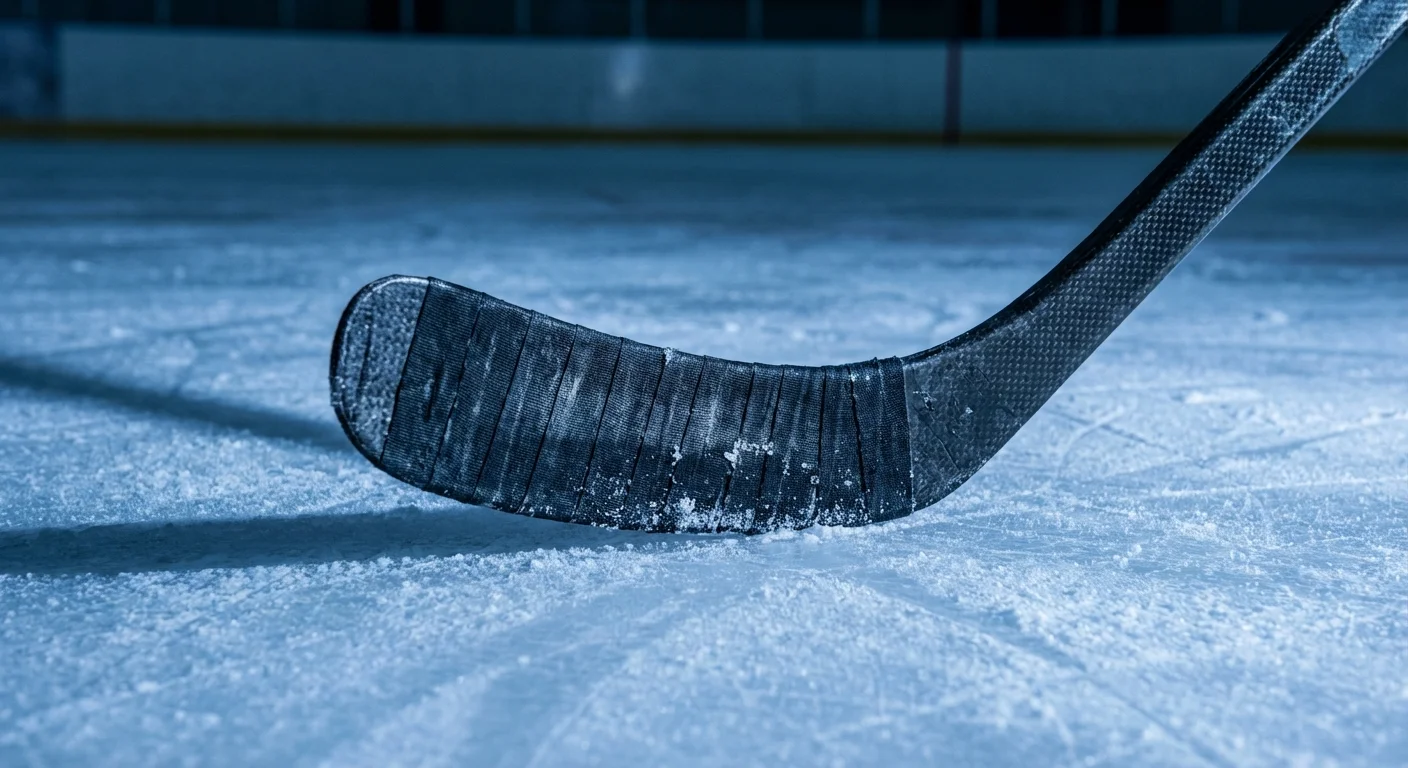
Tape protects the blade and provides grip on the puck. Black tape helps hide the puck from goalies. White tape shows puck position clearly for passes.
- Start from heel to toe for smooth puck release
- Overlap tape by half for even coverage
- Apply wax to reduce snow buildup
- Re-tape when edges fray or grip decreases
Shaft Care
Grip tape on the shaft improves control and absorbs sweat. Some players use a simple knob at the top, while others wrap substantial portions of the shaft.
- Build a comfortable knob for your top hand
- Keep tape tight to avoid bunching
- Check for chips or cracks regularly
- Store sticks flat or hanging to prevent warping
Ready to Hit the Ice?
With the right stick in your hands, it's time to put in the work. Check out our training resources for drills and exercises to improve your hockey game.
Explore Training Resources